Glamping vs Camping Cost Calculator
Compare your trip costs based on Ireland's 2025 pricing. Enter your details to see how much you'd spend on traditional camping versus glamping.
Your Estimated Costs
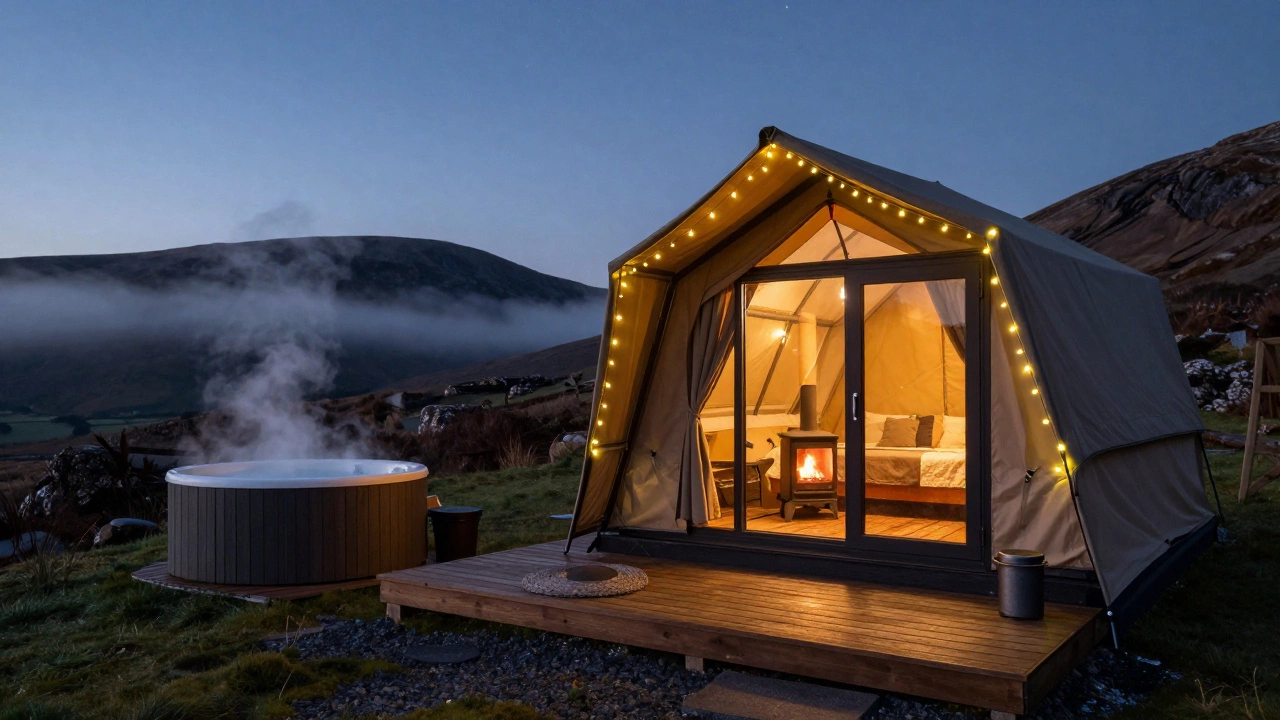
Ever looked at a glamping site with its cozy beds, fairy lights, and private hot tubs and thought, "Is glamping more expensive than camping?" You’re not alone. The short answer? Yes, usually - but not always. And the real question isn’t just about price. It’s about what you’re paying for.
What you get with glamping - and what you don’t
Traditional camping means pitching a tent, sleeping on the ground, hauling water, and cooking over a fire. Glamping? It’s camping with comfort. Think wooden cabins with real beds, electricity, heating, private bathrooms, and sometimes even kitchenettes. Some glamping sites in Ireland have wood-burning stoves, solar-powered lighting, and outdoor showers with views of the mountains.
It’s not just about luxury. It’s about accessibility. Families with young kids, older travelers, or people who’ve never camped before find glamping less intimidating. You don’t need to buy a tent, sleeping bags, or a camp stove. You show up, unpack, and relax.
Price breakdown: Camping vs glamping in Ireland
Let’s compare real numbers from sites across Ireland in late 2025.
For a standard tent pitch at a basic campsite - think Ballycroy National Park or Glendalough - you’ll pay between €15 and €25 per night. Add a family of four, and you’re looking at €60-€100 for a weekend. You’ll need to bring your own gear, food, and supplies. If you forget something, there’s no nearby shop.
Now, glamping. A basic glamping pod or yurt in County Clare or Wicklow starts at €80-€120 per night. A larger cabin with a kitchen and bathroom? €150-€250. Some high-end eco-cottages with hot tubs and private forests charge €300+.
That’s 3 to 10 times more than a tent spot. But here’s the catch: glamping often includes bedding, towels, firewood, and even breakfast. You’re not paying just for the space - you’re paying for convenience, comfort, and time saved.
Hidden costs of traditional camping
People forget the hidden price tag of camping. A decent tent costs €150-€300. Sleeping bags? €50-€100 each. A portable stove? €80. Cooking pots, chairs, lanterns, waterproof gear - it adds up fast. If you only camp once a year, you’re spending €500+ just on gear before you even reach the site.
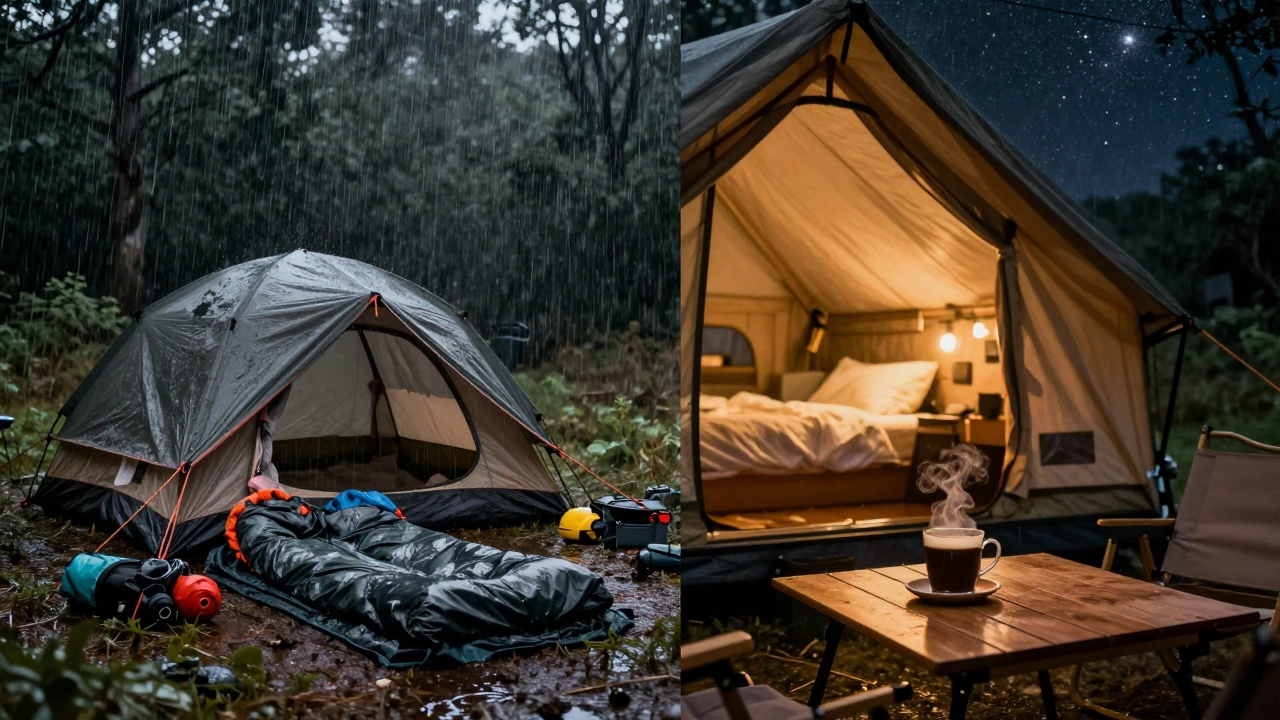
And what if it rains? You’re stuck in a soggy tent, damp and cold. Glamping sites are built for weather. Raised floors, insulated walls, and weatherproof roofs mean you stay dry no matter what.
Then there’s the time cost. Setting up a tent takes 30-60 minutes. Packing down? Another hour. Glamping? You check in, you check out. That’s 90 minutes of your weekend you get back.
Eco-friendly glamping: Is it really greener?
Some assume glamping is worse for the environment because it’s "luxury." But many eco-glamping sites in Ireland are designed to minimize impact. Solar panels power lights. Composting toilets replace septic systems. Rainwater is collected for showers. The structures are often built on stilts to protect the soil underneath.
Compare that to traditional camping: tents leave marks on grass, campfires can spark wildfires, and single-use plastics pile up from packaged food. Glamping sites often provide reusable dishes, refillable water stations, and zero-waste guidelines.
In fact, a 2024 survey by the Irish Environmental Protection Agency found that eco-glamping sites had 40% less waste per guest than traditional campsites.
Who benefits most from glamping?
Glamping isn’t just for honeymooners or influencers. It’s perfect for:
- Families with toddlers - no need to sleep on the ground or worry about bugs
- People with mobility issues - no climbing into tents or walking long distances to shared toilets
- First-time campers - no gear to buy, no skills to learn
- Couples wanting a romantic escape - think candlelit dinners under the stars, no setup required
If you’ve ever canceled a camping trip because the weather looked bad or you didn’t feel like packing, glamping removes that barrier.
When camping still wins
Glamping isn’t for everyone. If you’re an outdoor purist who loves the smell of wet earth, the sound of rain on nylon, and the challenge of building a fire from scratch - then glamping might feel too polished.
And if you’re on a tight budget? Camping is still the only option. A weekend of camping with a borrowed tent and packed sandwiches can cost under €50. Glamping doesn’t offer that.
Some people also prefer the freedom of camping - you can pitch a tent almost anywhere, while glamping requires booking months ahead at popular sites.
Is glamping worth the extra cost?
It comes down to what you value.
If you want to sleep under the stars without shivering, if you want to enjoy nature without the hassle, if you want to go camping but don’t want to spend your vacation setting up a tent - then yes, glamping is worth it.
Think of it like choosing between a hostel and a hotel. One is basic, the other is comfortable. Both get you to your destination. One costs less. The other gives you more back.
Glamping isn’t about being fancy. It’s about removing the friction between you and nature. And for many, that’s priceless.
How to save on glamping
Glamping doesn’t have to break the bank. Here’s how to find better deals:
- Book off-season - November to March, prices drop by 30-50%
- Look for midweek stays - Sunday to Thursday is often cheaper than weekends
- Check local tourism sites - many small eco-cottages offer direct discounts
- Join loyalty programs - some glamping networks give free nights after 3 stays
- Group bookings - 4+ people often get 15% off
There are also free or low-cost glamping options in Ireland - like community-run eco-pods in County Mayo, where you pay just €40 a night for a solar-powered cabin with shared facilities.
| Item | Camping (per night) | Glamping (per night) |
|---|---|---|
| Site fee | €15-€25 | €80-€250 |
| Equipment cost (one-time) | €200-€500 | €0 |
| Bedding included | No | Yes |
| Private bathroom | No | Usually yes |
| Heating | No | Yes |
| Food included | No | Sometimes |
| Setup time | 1-2 hours | 5-10 minutes |
Frequently Asked Questions
Is glamping really more expensive than camping?
Yes, glamping usually costs more per night - often 3 to 10 times more than a basic campsite. But you’re paying for comfort, convenience, and gear you don’t need to buy. For many, the extra cost saves time, stress, and even money in the long run if you don’t already own camping equipment.
Are glamping sites eco-friendly?
Many are. Eco-glamping sites in Ireland use solar power, composting toilets, rainwater collection, and biodegradable cleaning products. Some even plant trees for every booking. Compared to traditional camping - where litter, campfires, and single-use plastics are common - glamping can be the greener choice.
Can you glamp in winter in Ireland?
Absolutely. Most glamping pods and cabins are insulated and have heating - wood stoves, electric radiators, or underfloor heating. Many sites are open year-round, and winter stays often come with discounts. Snowy views from a warm bed are a real treat.
Do I need to bring anything to glamping?
Most sites provide bedding, towels, and basic kitchen supplies. You’ll still need to bring clothes, toiletries, and food. Some offer grocery delivery or breakfast packages. Always check what’s included before you book.
What’s the cheapest way to try glamping in Ireland?
Look for off-season deals (November-March), book midweek, or choose a shared-facility glamping pod. Sites like the Eco Pod Project in Mayo charge €40/night for a basic solar-powered cabin. You can also find discounted packages on local tourism websites or through loyalty programs.
Final thought: It’s not about cost - it’s about experience
Glamping isn’t camping with a price tag. It’s a different way to connect with nature. You still hear the wind, see the stars, smell the pine trees. You just do it in dry socks and without shivering.
If you’ve been putting off camping because it sounds too hard, too messy, or too cold - glamping is your invitation to try. And once you’ve slept under the stars in a warm cabin with a hot drink in hand, you might never go back to the tent.